What Is Hybrid Flooring? A Guide for Canberra Homeowners
If you have been researching new flooring in Canberra and keep coming across the term hybrid, you are not alone. It has become one of the most searched flooring categories in Australia over the past few years, and for good reason. Hybrid flooring sits in a practical middle ground between laminate and vinyl, borrowing the best characteristics of both while addressing some of the limitations that have frustrated homeowners with either product.
This guide answers the questions Canberra homeowners most commonly ask when they first encounter hybrid flooring, from how it is built through to how it performs in real living conditions.
What Is Hybrid Flooring, Exactly?
So what is hybrid flooring? It is a multi-layer flooring product built around a rigid core, typically made from a composite of limestone and PVC. That core is what sets hybrid apart from standard vinyl, which is flexible, and from laminate, which is vulnerable to moisture. The rigid core gives hybrid its dimensional stability and its ability to handle the conditions that other products struggle with. The layer structure from bottom to top generally includes:
- An attached underlay that provides cushioning, sound absorption and a degree of thermal insulation
- The rigid core layer, which provides structural stability and resistance to movement underfoot
- A vinyl wear layer printed with a realistic timber or stone visual
- A protective surface coating that resists scratching, scuffing and everyday wear
Each layer serves a specific function, and the combination produces a product that feels solid, looks realistic and holds up well under normal household use.
What Is Hybrid Flooring Made Of?
The core of most hybrid flooring products is a composite material combining limestone powder and PVC, sometimes referred to as SPC or stone plastic composite. This composition is what makes hybrid dimensionally stable, meaning it does not expand and contract significantly with changes in temperature or humidity. The wear layer on top is a thin sheet of vinyl printed with a high-resolution image of timber grain, stone or tile, then protected by a clear urethane coating. Materials breakdown by layer:
- Rigid core: limestone and PVC composite, dense and dimensionally stable
- Print layer: high-resolution photographic vinyl layer creating the visual appearance
- Wear layer thickness: typically between 0.3mm and 0.5mm for residential products, thicker for commercial use
- Underlay: pre-attached foam or cork layer bonded to the underside of each plank
The material composition is why hybrid performs differently from laminate, which uses a high-density fibreboard core that is sensitive to moisture.
Is Hybrid Flooring Waterproof?
This is one of the most common questions, and the answer is that hybrid flooring is water resistant across the full plank, not just the surface. Because the core is made from a composite of limestone and PVC rather than timber or fibreboard, it does not swell, warp or delaminate when exposed to water. Practical implications of this include:
- Hybrid can be installed in bathrooms, laundries and kitchens without the concerns that apply to laminate
- Surface spills can be cleaned without urgency; water does not penetrate the plank structure
- The product can handle humid environments without the dimensional movement that affects timber
- It is suitable for homes with underfloor heating, which creates temperature and humidity variation that laminate handles poorly
The waterproof core is one of the primary reasons hybrid has become a popular choice for whole-home installations rather than room-by-room selections.
How Hybrid Flooring Compares to Laminate
Laminate and hybrid look similar on the surface and are often confused, but their construction and performance differ in ways that matter in everyday use. The core distinction is moisture resistance: laminate uses an HDF core that is vulnerable to water damage, while hybrid's composite core is unaffected. That single difference shapes where each product makes sense in a home.
At a high level:
Hybrid handles wet areas; laminate does not. Hybrid is dimensionally stable across temperature ranges, while laminate can expand and contract. Both products click together using a floating installation method. Hybrid tends to cost more than entry-level laminate but less than quality timber.
For most households comparing the two, hybrid's performance characteristics justify the difference in price.
Where Hybrid Flooring Can and Cannot Be Installed
One of hybrid's practical advantages is its versatility across different rooms and conditions. The waterproof core and dimensional stability make it suitable in spaces where other hard flooring products are not recommended. Suitable installation locations include:
- Bathrooms and laundries where moisture and humidity are constant
- Kitchens where spills are frequent and temperature varies with cooking
- Living areas and bedrooms where comfort underfoot and acoustic performance matter
- Over existing hard flooring in renovation projects where height allowance permits
The primary limitation is outdoor installation; hybrid is not designed for direct UV exposure or fully outdoor environments. It also requires a reasonably level subfloor, as significant unevenness can cause the planks to move or create hollow spots underfoot.
How Hybrid Flooring Handles Canberra's Climate
Canberra's temperature range is more extreme than most Australian capital cities, with cold winters and warm summers creating the kind of seasonal variation that tests flooring performance. Timber flooring can move noticeably with Canberra's humidity swings, and laminate requires careful management around moisture. Hybrid's rigid composite core handles temperature and humidity variation without the dimensional movement that affects other products. Specific performance factors relevant to Canberra conditions include:
- Stability across the temperature range found in Canberra homes from winter to summer
- Compatibility with ducted heating systems that dry out interior air significantly during winter
- Suitable for use with underfloor hydronic heating, which a growing number of Canberra homes use
- Consistent performance without the need for seasonal acclimatisation periods before installation
For Canberra homeowners, the climate compatibility of hybrid flooring is a genuine practical advantage over timber and laminate alternatives.
What to Look for When Choosing a Hybrid Product
Not all hybrid flooring is the same, and the differences between products at different price points are worth understanding before making a decision. The key specifications to compare include:
- Wear layer thickness: 0.3mm suits low-traffic areas; 0.5mm or above is preferable for main living areas and high-traffic zones
- Overall plank thickness: thicker planks feel more solid underfoot and better accommodate minor subfloor irregularities
- Surface texture: embossed finishes that align with the printed grain look and feel more realistic than flat surfaces
- AC rating or commercial classification: a guide to how the product handles abrasion and wear over time
Paying attention to these specifications rather than selecting on price alone ensures the product suits the demands of the space it is going into.
Getting the Installation Right Matters as Much as the Product
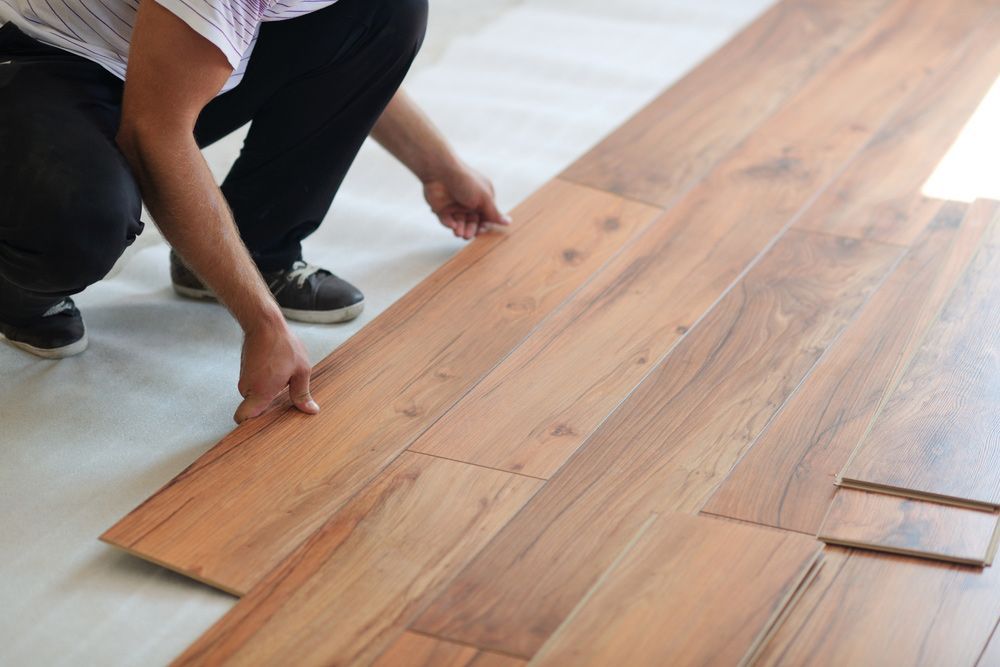
Hybrid flooring installs as a floating floor using a click-lock system, meaning planks connect to each other rather than being fixed to the subfloor. While the installation method is straightforward, preparation and technique still affect the long-term result. Key installation considerations include:
- Subfloor preparation: the surface must be clean, level and dry before installation begins
- Expansion gaps: a gap must be left around the perimeter of the room to allow for minor movement
- Plank direction: running planks toward the main light source generally produces the most natural appearance
- Transitions between rooms and materials need to be planned to ensure a clean finish throughout
Our team handles professional flooring installation in Canberra, managing everything from subfloor preparation through to the final finish so the product performs the way it should from day one.
Talk to Our Team About Hybrid Flooring
At Queanbeyan Carpets work with homeowners across Canberra who are working through exactly these decisions. Choosing flooring involves balancing aesthetics, performance, budget and the specific conditions of your home, and hybrid is not always the right answer for every situation. Our role is to help you understand the options clearly so you can make a decision you are confident in.
Whether you want to see samples in person, get advice on what suits a particular room or simply talk through the options before committing, our team is here to help.
Get in touch for a free quote and we will come to you to assess the space and talk through what will work.