Floating Floor Vs Glue-Down: Choosing The Right Installation Method
If you're weighing up
flooring installation in Canberra, the method matters almost as much as the product. Floating floors click together over an underlay and aren't fixed to the subfloor, while glue-down installations bond every plank directly to it with adhesive. Understanding both flooring installation methods helps you judge whether a floating floor vs glue down approach suits your subfloor, your room and how the space will be used, which is exactly what we assess on every job.
Floating vs Glue-Down: The Short Answer
A floating floor is faster to lay, more forgiving of minor subfloor imperfections and easier to lift or replace later – it's the go-to for hybrid and most laminate. A glue-down installation is more stable underfoot, handles large open spans and heavy traffic better and suits vinyl planks or sheet vinyl where a firmer feel is wanted. Most Canberra and Queanbeyan homes end up somewhere in between, and the subfloor usually decides it for you.
What Is a Floating Floor Installation?
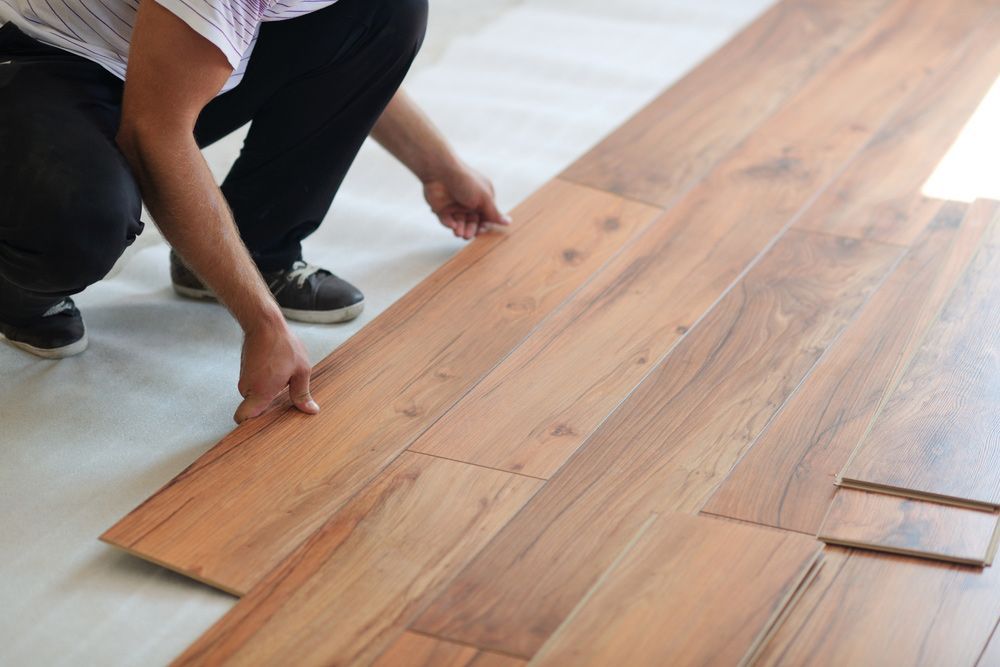
A floating floor isn't fixed to the subfloor at all. Planks connect to each other using a click-lock or tongue-and-groove joint, sitting on top of a thin acoustic underlay that cushions sound and smooths out small variations in the concrete or particleboard beneath. A click flooring installation like this relies on the joins locking tightly rather than any adhesive or fixings. Because the whole floor moves as one connected sheet, an expansion gap is left around the entire perimeter – usually hidden under skirting or a scotia trim – to allow the boards to expand and contract with temperature and humidity.
This is where Canberra's climate actually changes the job. Cold winters, dry indoor air from heating and wide day-to-night temperature swings mean floating floors here move more than they would in a milder coastal climate, so getting that perimeter gap right isn't optional. It's also why DIY click-lock installs often go wrong: the locking mechanism is genuinely easy to fit, but skipping subfloor prep or running boards too tight to a wall or door frame is where most self-installed floors start lifting or gapping within a year.
What Is a Glue-Down Installation?
A glue-down floor is bonded directly to the subfloor using a pressure-sensitive or trowel-applied adhesive, most commonly with vinyl planks and sheet vinyl. Because there's no air gap or floating layer, the floor sits lower, feels firmer and quieter underfoot and is less prone to movement over large areas. The trade-off is preparation: the subfloor needs to be clean, level and dry before adhesive goes down, and depending on the product, we'll often allow cure time before furniture goes back on so the bond has properly set.
Which Method Suits Vinyl, Laminate & Hybrid Flooring?
Across
our flooring range, the preferred method changes with the product. Laminate is almost always floated, since its core isn't designed to take adhesive. Floating hybrid flooring is also the standard approach for hybrid boards, thanks to their rigid core and attached underlay, part of what makes hybrid such a popular choice for renovations. Our guide to
what hybrid flooring is explains how that construction works. Vinyl planks and sheet vinyl can go either way: floating for a quicker, cost-effective fit or glue-down where extra stability or a lower profile is needed, such as under heavy furniture or in a commercial fit-out.
Which Method Is Right for Your Room?
Living areas and bedrooms with a standard concrete or timber subfloor generally do well with a floating floor – it's quicker to install and easy to work around existing skirting. Larger open-plan spaces, hallways with heavy foot traffic or commercial areas benefit from glue-down, since the adhesive stops the floor shifting as a single large sheet under constant movement. Moisture-prone areas like laundries need particular care either way – the subfloor moisture reading, not personal preference, usually determines whether floating is even suitable there.
Why the Installation Method Affects Durability & Future Repairs
This is where the two methods really diverge for landlords and long-term owners. A damaged board in a floating floor can often be lifted and swapped without disturbing the rest of the run, provided the click-lock system allows it – useful for rental properties needing occasional repairs. A glue-down board is bonded permanently, so replacing one usually means carefully cutting it out and re-adhering a new piece, which is a more involved repair. The same logic applies at end of life: floating floors can typically be lifted intact, while glue-down flooring generally needs to be scraped or ground off the subfloor.
What Our Installers Check Before Recommending a Method
Before we recommend either method, we check the subfloor for levelness, moisture content and general condition. A slab with high moisture readings changes what underlay or adhesive is appropriate. We also measure floor height against doorways and thresholds, since adding underlay or adhesive can shift clearances by several millimetres, and we mark out expansion gaps around the perimeter before the first board goes down. In Canberra particularly, we factor in the building's exposure to temperature swings, since a floor installed without enough allowance for movement is one of the more common causes of squeaking or peaking down the track. As professional flooring installers Canberra homeowners rely on, our team handles flooring installation in Canberra from the first subfloor check through to the final trim.
Not sure which method your subfloor will take? Get a free quote and we'll assess it in person. Whether you're weighing up flooring installation in Canberra for a full home or just one room, we'll recommend the method that suits your subfloor, not just the product you've picked. Contact Queanbeyan Carpets to learn more today.
Frequently Asked Questions
Is a floating floor cheaper to install than glue-down?
Floating floors are generally quicker to lay, which can reduce labour time. However, overall cost depends on subfloor prep, the product chosen and room size, so it's best assessed on-site rather than assumed.
Can I install a floating floor myself?
Click-lock systems are designed to be DIY-friendly, but subfloor levelness, moisture checks and correct expansion gaps are easy to get wrong. Most DIY issues trace back to skipped prep rather than the locking mechanism itself.
Does glue-down flooring last longer than floating flooring?
Both can last many years when installed correctly. Glue-down tends to handle heavy, constant foot traffic slightly better, while floating floors are easier to repair or replace individual boards if damage occurs.
Which method is best for hybrid flooring?
Hybrid flooring's rigid core and attached underlay are built for floating installation, which is how we lay it in almost all cases. Its stability comes from the board itself rather than an adhesive bond.
What happens if a plank gets damaged after installation?
With a floating floor, an individual board can often be lifted and replaced if the click-lock system allows it. With glue-down flooring, repairs are more involved since the board is permanently bonded to the subfloor.